Land vs Financial Investments: Why Chasing Wealth Through Real Estate and Loans Can Make You Asset-Rich but Cash-Poor

Land vs Financial Investments: Why Chasing Wealth Through Real Estate and Loans Can Make You Asset-Rich but Cash-Poor
A Practical Guide for First-Generation Investors on Real Estate, Mutual Funds, Debt Management, and Building Long-Term Wealth
By P.C. Balasingh | RxT – A Financial Health Clinic
Introduction: Are You Building Wealth or Just Accumulating Assets?
Many people believe that buying land, constructing houses, and accumulating properties are the safest ways to become wealthy. For generations, owning gold, land, and houses has been considered a symbol of financial security and social status.
However, a new generation of Indians is facing a different financial challenge. They earn considerably more than their parents did, have access to multiple investment opportunities, and enjoy better financial services. Yet many struggle with cash flow, excessive loans, and the inability to enjoy the wealth they have accumulated.
A person may own several properties worth crores of rupees but still struggle to pay school fees, insurance premiums, or monthly expenses.
This raises an important question:
Are you genuinely building wealth, or are you simply accumulating assets while sacrificing your financial freedom?
In an insightful discussion with Nakkheeran, investment advisor P.C. Balasingh explains why first-generation investors often make mistakes, why real estate is not always the best investment, how loans influence financial decisions, and why patience and financial discipline are essential for long-term wealth creation.
1. The First-Generation Investor: A New Financial Challenge
Previous generations primarily focused on earning enough money to meet their family's basic needs. Investment planning, equity markets, mutual funds, and diversified portfolios were not common topics in most households.
For many families, financial security meant:
Owning a house.
Purchasing gold.
Acquiring agricultural land or other properties.
Saving money through traditional savings instruments.
Avoiding financial risks.
Today's generation has access to significantly more financial opportunities. Salaried professionals, IT employees, business owners, and entrepreneurs are increasingly exploring equity investments, mutual funds, gold, and exchange-traded funds.
However, there is a fundamental challenge.
The previous generation passed down money habits, but not necessarily investment knowledge.
People who grew up watching their parents struggle financially may develop an excessive fear of spending money. Even after earning well, they may feel guilty about spending on quality experiences, travel, better accommodation, or personal comfort.
This creates two problems:
They struggle to enjoy the money they earn.
They may not understand how to invest their accumulated savings effectively.
Financial success should not mean simply accumulating money. It should mean using money intelligently to create security, freedom, and a better quality of life.
2. Why Real Estate Becomes the Default Investment Choice
For many Indian families, land and houses represent more than financial assets.
They represent:
Security.
Social status.
Family identity.
Independence.
A sense of achievement.
People who grew up in rented houses or experienced housing insecurity naturally aspire to own a home. This aspiration is valid and deserves respect.
However, the problem begins when every financial surplus is directed towards purchasing another property.
A common pattern among high-income professionals is:
They work hard and increase their income.
They purchase their first property using a home loan.
They spend several years repaying EMIs.
Once the loan is cleared, they purchase another property.
They accumulate more debt and repeat the cycle.
Eventually, they may own valuable properties but have very little readily available cash.
This is an important distinction:
Asset ownership is not the same as financial freedom.
A property may have a high market value, but it cannot always be converted into cash quickly or without a financial loss.
Financial planning must therefore consider both asset value and liquidity.
3. The Cash-Rich but Cash-Poor Problem
One of the important concepts discussed by Balasingh is the situation in which individuals possess considerable wealth in the form of assets but have insufficient cash to meet their immediate needs.
Consider this hypothetical example:
A professional owns:
A residential property worth ₹1 crore.
Agricultural land worth ₹50 lakh.
Another property worth ₹75 lakh.
The total asset value is ₹2.25 crore.
However, the individual has:
Significant monthly loan repayments.
Household expenses.
Children's education fees.
Insurance premiums.
Other financial commitments.
Despite owning assets worth crores, the person may struggle to arrange ₹1 lakh for an unexpected expense.
This creates financial anxiety.
A financially healthy portfolio should not concentrate entirely on illiquid assets. It should also include investments and savings that can be accessed when required.
The objective is not simply to increase net worth but to maintain sufficient liquidity and financial flexibility.
4. Should You Buy a House or Invest in Mutual Funds?
This is one of the most frequently discussed questions in personal finance.
Many financial discussions recommend investing in mutual funds rather than purchasing residential property because financial investments may offer greater liquidity, diversification, and long-term growth potential.
However, telling everyone not to buy a house is equally inappropriate.
The decision depends on the individual's financial background, family circumstances, employment location, lifestyle, and long-term goals.
When buying a house makes financial sense
Buying a house may be a reasonable decision when:
You need a permanent residence.
Your family has experienced housing insecurity.
You intend to settle in that location.
The property is affordable relative to your income.
The EMI does not compromise essential expenses and investments.
Homeownership provides meaningful personal and family satisfaction.
For someone whose parents have never owned a home, purchasing a house may represent the fulfilment of a lifelong family aspiration.
Financial planning should recognise this emotional and social value.
When buying a house can become a financial burden
Buying property may become problematic when:
You purchase primarily because property prices might increase.
You borrow excessively to acquire multiple properties.
You are unsure where you will settle.
Your job requires geographical mobility.
You purchase an apartment expecting guaranteed rental income or appreciation.
Your property investments consume most of your available savings.
For example, an IT professional working in Chennai may eventually receive an opportunity to work abroad or relocate to another city.
If that person purchases a property in Chennai without considering future mobility, the property may restrict career decisions.
A better approach may be to rent while working in different locations and purchase a permanent home once the individual knows where they intend to settle.
A house should serve your life, not become a financial burden that controls your life.
5. Is Buying Land Today Better Than Buying It Ten Years Later?
A common argument for purchasing land immediately is that property prices and construction costs will increase over time.
People worry that a property currently available for ₹1 crore may cost ₹2 crore or ₹3 crore after ten years.
However, this argument considers only property-price inflation. It does not consider the potential growth of alternative investments.
The more important question is:
What happens if you invest your money in another suitable asset today and purchase the property later?
Consider an illustrative example:
Suppose you have ₹1 crore available today and want to purchase a property that you may need ten years from now.
You have two possible approaches:
Approach A: Buy the property immediately
Invest ₹1 crore in the property.
Hold it for ten years.
Benefit from any increase in its market value.
Bear maintenance, transaction, taxation, and other ownership costs.
Approach B: Invest the money and purchase later
Invest ₹1 crore in a diversified financial portfolio.
Allow the investment to grow over ten years.
Purchase the property when you actually need it.
Retain any surplus after purchasing the property.
For illustration, if ₹1 crore compounds at an assumed annual rate of 12% for ten years, it grows to approximately ₹3.11 crore before taxes and costs.
This demonstrates the importance of opportunity cost.
However, 12% is an illustration, not a guaranteed investment return. Financial market investments can fluctuate, and actual returns may be substantially lower.
Likewise, property appreciation is not guaranteed.
The correct decision requires comparing realistic after-tax returns, investment risks, liquidity, and the intended use of the property.
The central lesson is that you should not automatically purchase land simply because you believe prices will increase.
6. Social Pressure: Why People Buy Properties They Do Not Need
Real estate purchasing decisions are frequently influenced by social pressure.
Consider this situation:
A colleague purchases an apartment. Friends and relatives attend the housewarming ceremony. Photographs are shared on social media. Others begin wondering why they have not purchased a property themselves.
This creates what is commonly called peer pressure.
Property developers, banks, and marketing agencies also actively promote homeownership through advertisements, offers, and loan campaigns.
Young professionals may start receiving home-loan offers even before they have developed a proper financial plan.
The result is that some individuals make long-term financial commitments based on external expectations rather than actual requirements.
Balasingh highlights an important distinction: owning property may create a feeling of authority or social status, but this does not necessarily translate into genuine financial independence.
Do not purchase an asset merely because everyone around you is purchasing one.
Evaluate whether it supports your financial goals.
7. Why Easy-to-Buy Properties May Not Always Be Great Investments
Another important observation from the discussion is that investors should be cautious when a property is aggressively marketed and made easily available to everyone.
When a property is promoted through multiple platforms, attractive offers, and repeated sales calls, buyers should investigate why the seller is so eager to sell.
This does not mean every heavily advertised property is a bad investment.
However, investors should examine:
The actual market value.
The location and future development potential.
The demand for resale.
The builder's reputation.
Legal ownership and title documentation.
Construction quality.
Rental demand.
Maintenance expenses.
The availability of competing properties.
An investment should be evaluated based on its underlying value, not merely its promotional appeal.
A property being affordable or easily available does not automatically make it a profitable investment.
8. Understanding Loans: Are All Loans Bad?
Many people consider debt inherently negative. However, debt is a financial tool, and its usefulness depends on its purpose, interest rate, repayment capacity, and the benefit it creates.
For example:
An education loan may help someone acquire valuable skills.
A home loan may help a family purchase a necessary residence.
A business loan may support productive expansion.
A personal loan used for unnecessary consumption may create financial stress.
The important distinction is between productive borrowing and borrowing that creates an unsustainable financial burden.
Balasingh discusses the importance of understanding the relationship between borrowing costs and potential investment returns.
For example, suppose a person has a loan carrying 9% annual interest and is considering whether to use additional available money to repay the loan or invest it.
If a suitable investment were to generate a hypothetical 15% annual return, the apparent difference would be 6%.
However, investment returns are uncertain, whereas loan interest is a contractual cost.
Therefore, comparing a guaranteed borrowing cost with an assumed investment return requires caution.
Before choosing to invest instead of repaying a loan, consider:
Whether the investment return is guaranteed or market-linked.
The tax implications.
The remaining loan tenure.
Whether the interest rate is fixed or floating.
The risk of investment losses.
Your emergency savings.
Your ability to continue paying EMIs.
The consequences of a change in income.
High-interest debt, particularly credit card balances and expensive personal loans, generally deserves priority.
The objective should be to use debt strategically without compromising financial stability.
9. Why Young Professionals Fall into the EMI Trap
The interview also discusses how young professionals can become financially committed soon after entering employment.
A typical sequence may look like this:
A student graduates with an education loan.
They begin working and start repaying the education loan.
They obtain a credit card.
They take a personal loan for additional expenses.
They purchase a two-wheeler or car through financing.
They eventually consider a home loan.
Within a relatively short period, several EMIs may consume a significant portion of their monthly income.
The problem is not necessarily that every loan is inappropriate. The problem is that individuals may commit their future income before developing a comprehensive financial plan.
A salary increase can create a false sense of financial security.
Instead of automatically increasing spending and borrowing, young professionals should establish a structured approach to:
Monthly budgeting.
Emergency fund creation.
Debt management.
Insurance protection.
Regular investments.
Retirement planning.
Financial independence starts with controlling commitments, not simply increasing income.
10. Why People Prefer Loans Over Investments
One interesting question raised in the interview is why people are more attracted to loans than investments.
The explanation is rooted in the timing of gratification.
When you borrow money to purchase a motorcycle, you receive the motorcycle immediately.
When you borrow money for education, you receive access to education immediately.
The benefit is visible and immediate.
Investments work differently.
You may invest money every month for five, ten, or fifteen years before experiencing substantial wealth creation.
This difference in timing influences human behaviour.
People often prefer immediate satisfaction over delayed financial rewards.
It also explains why some investors are attracted to schemes promising 30% or 50% returns.
Such promises create the expectation of rapid wealth creation.
Unfortunately, unrealistic return expectations can expose investors to fraud and unsuitable financial products.
Wealth creation is generally a process, not an overnight event.
11. The Danger of Unrealistic Investment Return Promises
A common mistake among first-generation investors is believing that high returns can be achieved quickly and consistently.
When someone promises extraordinary returns with little or no risk, investors should be extremely cautious.
Legitimate investments involve risks, and higher expected returns generally involve higher levels of uncertainty.
Investors should be particularly careful about:
Guaranteed high-return schemes.
Unregulated investment opportunities.
Ponzi and pyramid schemes.
Unverified real estate projects.
Investments that depend on recruiting new participants.
Products that do not clearly explain their underlying risks.
Before investing, understand the product, the organisation offering it, the underlying assets, the costs, and the exit conditions.
Never invest merely because someone you trust recommends an opportunity.
12. Investment Requires Discipline, Patience, and Consistency
One of the strongest messages from Balasingh's discussion is that successful investing is often repetitive and uneventful.
It does not necessarily involve continuously finding new investment opportunities or chasing market trends.
It involves:
Establishing clear financial goals.
Choosing suitable investment instruments.
Investing consistently.
Maintaining an appropriate asset allocation.
Reviewing the portfolio periodically.
Avoiding unnecessary emotional decisions.
Remaining invested according to the financial goal and risk capacity.
A disciplined investor understands that wealth creation takes time.
Investing consistently over five, ten, or more years can potentially create substantial wealth through the power of compounding.
However, the investment strategy must be appropriate for the investor's financial situation and risk tolerance.
Patience is important, but patience alone is not a strategy. Investors also need proper asset allocation, diversification, and periodic reviews.
13. Why Insurance Should Not Be Confused with Investment
The interview also highlights the difference between pure term insurance and traditional savings-oriented insurance policies.
Many people prefer insurance products that promise a maturity benefit because they expect to receive money back after paying premiums.
However, insurance and investment serve different financial purposes.
Pure Term Insurance
Term insurance primarily provides financial protection to the policyholder's family.
If the insured person dies during the policy term and the claim conditions are satisfied, the nominee receives the policy benefit.
It is generally designed to provide substantial life cover at a relatively affordable premium.
A pure term plan usually does not provide a maturity benefit.
Traditional Savings-Oriented Insurance Policies
Some traditional insurance policies combine life insurance with savings or maturity benefits.
These products may appeal to people who prefer receiving a payment at maturity.
However, their premiums, insurance coverage, returns, and flexibility may differ significantly from pure term insurance and independent investment products.
The correct product depends on the individual's protection requirements and financial goals.
A useful principle is:
Use insurance primarily to protect your family's financial future, and use suitable investment products to build wealth.
14. How First-Generation Investors Can Build Financially Healthy Portfolios
The challenges faced by first-generation investors require a structured approach.
Here are some practical steps.
Step 1: Understand Your Financial Position
Calculate your:
Monthly income.
Household expenses.
Existing loans.
EMI commitments.
Assets.
Investments.
Insurance coverage.
Financial liabilities.
Knowing your actual financial position is the foundation of effective planning.
Step 2: Establish an Emergency Fund
Maintain sufficient readily accessible savings to handle unexpected expenses or income disruptions.
The appropriate amount depends on employment stability, family responsibilities, and monthly commitments.
Step 3: Protect Your Family
Review your health insurance and life insurance requirements.
Ensure that your family's financial needs are protected against unexpected events.
Step 4: Set Clear Financial Goals
Separate your goals into different time horizons.
For example:
Short-term: Emergency savings and planned expenses.
Medium-term: Education, vehicle purchase, or a home down payment.
Long-term: Retirement and wealth creation.
Step 5: Diversify Your Investments
Avoid concentrating your entire financial portfolio in one asset class.
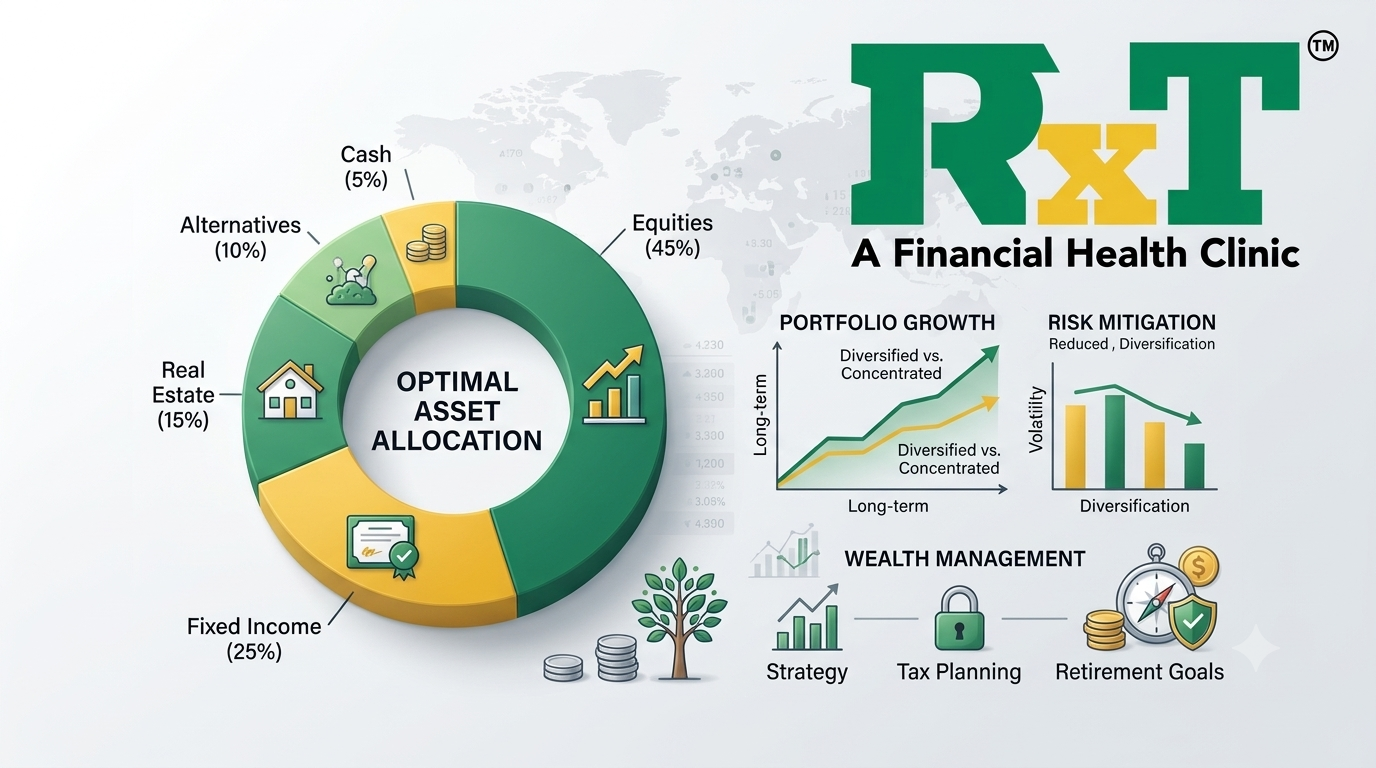
Depending on your circumstances, a diversified portfolio may include:
Equity mutual funds.
Debt instruments.
Fixed-income investments.
Gold.
Real estate.
Cash and liquid investments.
The allocation should reflect your financial goals, investment horizon, liquidity requirements, and ability to tolerate risk.
Step 6: Avoid Unnecessary Property Accumulation
Purchase a home when it serves a genuine residential or financial purpose.
Do not automatically purchase additional land or apartments simply because you have cleared your previous loan.
Step 7: Review Your Debt Strategy
Not all loans require identical treatment.
Prioritise high-interest debt, understand repayment obligations, and evaluate whether additional borrowing is justified.
Step 8: Invest Consistently
Create a sustainable investment plan and follow it regularly.
Avoid making decisions based on temporary market excitement or unrealistic return promises.
Step 9: Enjoy Your Wealth Responsibly
Money is not meant to be accumulated endlessly.
Use your financial resources to improve your quality of life while preserving your future financial security.
15. The Real Meaning of Financial Freedom
Financial freedom does not mean owning the maximum number of properties.
It does not mean having the highest salary or the largest investment portfolio.
It means having sufficient financial resources, flexibility, and protection to make life decisions without being controlled by financial pressure.
A person with fewer assets but adequate liquidity, manageable liabilities, and a well-diversified investment portfolio may enjoy greater financial freedom than someone owning multiple properties with substantial debt.
The objective should be to build wealth that supports your life, not a collection of assets that restricts it.
Conclusion: Build Wealth, Not Financial Stress
The central message of P.C. Balasingh's discussion is that the investment habits of previous generations should not automatically determine the financial decisions of today's generation.
Owning a house is important. Buying land may be appropriate. Gold can have a place in a portfolio. Loans can serve useful purposes.
But none of these should become automatic financial decisions.
Every investment must be evaluated based on the individual's circumstances, goals, risks, and opportunity costs.
First-generation investors have an opportunity that previous generations may not have had: access to a wider range of financial products and information.
The challenge is learning how to use these opportunities wisely.
Do not become asset-rich but cash-poor. Do not confuse social status with financial security. Do not sacrifice your present life for the endless accumulation of assets.
Build a financial plan that balances wealth creation, protection, liquidity, and quality of life.
Because true financial success is not measured only by what you own. It is also measured by the freedom your money gives you.
Frequently Asked Questions (FAQs)
1. Is buying land a better investment than mutual funds?
Not necessarily. Land and mutual funds have different risk, return, liquidity, and cost characteristics. Land may offer appreciation but can involve legal, maintenance, and resale challenges. Mutual funds provide access to diversified financial markets but carry market risk. The appropriate choice depends on your goals and investment horizon.
2. Should I buy a house or invest in mutual funds first?
If you need a permanent home and can afford it without compromising your financial stability, buying a house may be appropriate. If you are uncertain about your long-term location or primarily seeking wealth creation, investing in a diversified portfolio while renting may be worth considering.
3. Why do people become asset-rich but cash-poor?
This happens when a large proportion of their wealth is tied up in illiquid assets such as land and property, while their monthly expenses, EMIs, and other financial commitments consume available cash.
4. Is taking a loan to invest a good strategy?
Borrowing to invest can increase both potential returns and potential losses. It should not be considered a guaranteed wealth-building strategy. Loan interest, taxes, investment volatility, repayment capacity, and liquidity must all be evaluated.
5. Should I repay my home loan early or continue investing?
The decision depends on the loan's effective interest rate, remaining tenure, tax treatment, investment risk, and your financial situation. High-interest debt generally deserves priority. Do not assume that market investments will consistently outperform your loan interest rate.
6. Why do first-generation investors prefer real estate?
Family experiences, cultural expectations, housing insecurity, social status, and the traditional belief that land and gold are safe assets influence many first-generation investors.
7. What is the biggest investment mistake young professionals make?
One major mistake is committing too much future income to loans and EMIs before establishing emergency savings, adequate insurance, and a consistent investment strategy.
8. Is a guaranteed 30% or 50% investment return realistic?
Such promises should raise serious concerns. No legitimate market-linked investment can guarantee consistently extraordinary returns without risk. Investors should verify the provider, product, regulatory status, and underlying investment structure.
9. Is term insurance better than traditional savings insurance?
Pure term insurance is primarily designed for life protection, while traditional savings-oriented policies may combine insurance and maturity benefits. Compare the actual coverage, premiums, returns, and suitability before choosing.
10. How can first-generation investors build long-term wealth?
By understanding their financial position, managing debt, maintaining emergency savings, securing adequate insurance, diversifying investments, investing consistently, and avoiding decisions driven by social pressure or unrealistic return expectations.
About RxT – A Financial Health Clinic
RxT is a financial wellness service that approaches money management like healthcare. Just as healthcare professionals diagnose health problems and prescribe suitable treatments, RxT focuses on identifying financial challenges and recommending solutions to improve financial health.
RxT helps individuals and families understand their financial position, manage liabilities, plan investments, protect wealth, and work towards long-term financial independence.
RxT – A Financial Health Clinic
Diagnose Your Financial Health. Prescribe Your Financial Future.
Website: https://www.rxt.app/
Source Video
Watch the original discussion featuring investment advisor P.C. Balasingh:
https://www.rxt.app/news-and-media/land-vs-mutual-funds-property-investment-mistakes
This article is based on the interview discussion and has been organised into an educational article. Illustrative investment calculations are not guaranteed returns or individual investment recommendations. Investment decisions should be made after evaluating personal financial circumstances and risks.