 Loading…Loading…

Is There Really No Chance of Gold Prices Falling? What Historical Data Tells Investors
Understanding Gold Price Corrections, Long-Term Returns, the Impact of Rupee Depreciation, and the Right Investment Strategy
Gold has become one of the most discussed investment assets in recent times. With prices reaching historic highs, many investors are wondering whether they should buy gold now or wait for prices to fall.
A common belief among Indian investors is that gold prices never fall significantly. Gold is traditionally considered a safe investment, a store of value, and an important part of Indian culture. However, does historical data actually support the belief that gold prices always increase?
The answer is no.
Gold prices have experienced substantial corrections in the past. Understanding these historical movements, the relationship between the US dollar and the Indian rupee, and the long-term performance of gold can help investors make more informed decisions.
This article examines three important aspects of gold investing:
Can gold prices actually fall?
What returns has gold generated over the past 25 years, and can investors expect similar returns in the future?
What is the right investment strategy when buying gold?
One of the biggest misconceptions among Indian investors is that investing in gold cannot result in losses.
Gold is often viewed as an asset that only appreciates over time. However, historical market movements clearly demonstrate that gold prices can experience significant declines.
Let's examine three important historical periods.
In 1980, international gold prices reached approximately $830 per troy ounce.
During this period, the United States introduced monetary measures to control inflation, including substantial increases in interest rates.
Higher interest rates changed investor preferences and reduced the attractiveness of gold as an investment.
As a result, gold prices experienced a dramatic correction.
According to the historical figures discussed in the video:
Gold prices declined from approximately $830 per ounce.
Within around two years, prices fell to approximately $400 per ounce.
This represented a decline of nearly 53%.
This historical example demonstrates that even gold, traditionally considered a safe-haven asset, can experience substantial losses.
Gold reached another significant peak in 2011, with international prices approaching $1,900 per ounce.
However, the following years witnessed a substantial decline.
Between 2011 and 2015:
International gold prices declined by approximately 45%.
Prices moved towards the $1,000 per ounce range.
Investors who purchased gold near its peak experienced a considerable decline in its international market value.
This is a relatively recent example that demonstrates how buying gold at historically high prices can expose investors to significant corrections.
Even during the COVID-19 period, gold experienced price corrections.
The video highlights a decline of approximately 20% during this period.
This reinforces an important investment principle: no asset class continuously moves in one direction.
Gold can rise, fall, consolidate, and remain stagnant for extended periods.
Key takeaway: Gold is not a risk-free investment. Historical performance shows that investors can experience substantial losses when they purchase gold at elevated market prices.
This is one of the most important concepts Indian gold investors should understand.
International gold prices are primarily quoted in US dollars. However, Indian consumers purchase gold using Indian rupees.
Therefore, the Indian gold price is influenced by two important factors:
The international price of gold.
The exchange rate between the US dollar and the Indian rupee.
Even when international gold prices decline, depreciation of the Indian rupee can reduce or completely offset the impact of that decline in the domestic market.
Consider the historical examples discussed in the video.
1980: The US dollar was worth approximately ₹8.
Recent period discussed in the video: The US dollar was trading around ₹88–₹90.
This illustrates the substantial depreciation of the Indian rupee against the US dollar over the decades.
As a result, even when international gold prices decline, the weakening rupee can help support gold prices in India.
The period between 2011 and 2015 provides a useful illustration.
During this period:
International gold prices declined by approximately 40–45%.
The Indian rupee weakened from approximately ₹44 per US dollar to around ₹66–₹67.
The depreciation of the rupee partially offset the international decline in gold prices.
Consequently, Indian investors did not experience the same level of decline in domestic gold prices as investors tracking gold in US dollars.
This explains why Indian investors sometimes believe that gold prices never fall.
In reality, international gold prices may have declined, but currency depreciation can cushion the impact for Indian investors.
Important insight: When evaluating gold returns in India, investors should consider both international gold price movements and currency exchange rate movements.
Historical returns provide useful information when evaluating any investment.
However, investors should distinguish between past performance and future expectations.
According to the figures discussed in the video, gold generated approximately:
Measurement | Approximate annual growth discussed |
|---|---|
Gold measured in US dollars | 10% |
Gold measured in Indian rupees | 14% |
The additional return in Indian rupee terms is largely attributed to the depreciation of the rupee against the US dollar.
These figures illustrate why Indian investors have experienced stronger returns from gold than investors measuring their returns purely in US dollars.
However, the additional currency-related return should not automatically be assumed to continue at the same rate.
This is an important question for anyone considering investing in gold today.
If gold generated approximately 10% growth in dollar terms and 14% in Indian rupee terms over the historical period discussed, should investors expect similar returns during the next 25 years?
Not necessarily.
A significant portion of the additional return came from the depreciation of the Indian rupee.
For Indian investors to receive another comparable currency-related advantage, the rupee would need to depreciate substantially further against the dollar.
For example, if the exchange rate moves from approximately ₹90 to ₹150 or even ₹180 per dollar over the next 25 years, currency depreciation could contribute to higher gold returns in rupee terms.
However, this is not guaranteed.
Economic growth, government policies, inflation management, productivity, and the strength of the Indian economy can influence the future value of the rupee.
A stronger and more stable Indian economy could help support the currency rather than allowing continuous depreciation.
Therefore, investors should not automatically project the historical 14% return into the future.
Another important factor is the global economic environment.
Gold often attracts investors during periods of uncertainty, geopolitical tensions, economic instability, and concerns about inflation.
The unusually strong demand for gold during uncertain periods can contribute to higher prices.
However, geopolitical tensions and trade conflicts do not necessarily continue at the same intensity forever.
If global economic conditions become more stable, demand for gold as a safe-haven asset could change.
Consequently, the exceptional returns experienced during a particular historical period may not be repeated.
Investors should evaluate future returns based on realistic expectations rather than assuming that the past will repeat itself.
One of the most valuable lessons from the discussion is that investors often make decisions based on market excitement rather than financial planning.
When gold prices rise sharply, people begin discussing gold everywhere.
The same behaviour occurs with other investment assets:
When land prices increase, everyone starts discussing real estate.
When stock markets rise, more people become interested in equities.
When gold prices reach record highs, investors rush to purchase gold.
This behaviour is driven by the fear of missing out on potential profits.
However, investing because an asset is rising is not the same as investing because it fits your financial plan.
The video uses an interesting railway analogy to explain this behaviour.
Imagine that you want to travel to your hometown by train.
You know your destination, your departure date, and your departure time. You purchase your ticket in advance and reach the railway station before the train leaves.
This is a planned journey.
Now imagine another situation.
You have purchased the ticket but arrive at the station exactly when the train is about to depart.
You see the train moving and become anxious that you might miss it. In a hurry, you attempt to board the moving train.
Someone who does not even need to travel may also attempt to board the train simply because it is moving.
This is unnecessary risk-taking.
The same behaviour happens in financial markets.
When gold, land, or stocks rise rapidly, investors rush to purchase them because they fear missing out on future gains.
They may purchase an asset even when:
They do not have an immediate financial requirement.
They have not planned their investment allocation.
They are buying at an elevated market price.
They have not evaluated the risks.
They are investing because of market excitement rather than financial goals.
The lesson is simple:
Do not try to board a moving train just because it is moving. Similarly, do not purchase an investment merely because its price is increasing.
Instead of trying to predict whether gold prices will rise or fall tomorrow, investors should develop a structured investment strategy.
A good investment strategy begins with understanding personal financial requirements.
Before purchasing gold, determine the quantity you want to own.
For example:
Do you need 10 sovereigns?
Do you need 20 sovereigns?
Are you buying gold for jewellery and family requirements?
Are you buying gold as part of your investment portfolio?
Your financial objective should determine your purchase decision.
Once you determine how much gold you need, decide when you intend to purchase it.
For example, if your requirement is 10 sovereigns, you may plan to accumulate that quantity over a predetermined period.
Instead of purchasing the entire quantity because prices are rising, establish a purchase schedule and follow it.
This helps reduce emotionally driven investment decisions.
Decide how much money you intend to allocate to gold.
You should not invest all your available money in gold simply because it is performing well.
Your allocation should reflect your financial goals, investment horizon, liquidity requirements, and ability to tolerate risk.
A financially healthy investment portfolio should not depend entirely on one asset class.
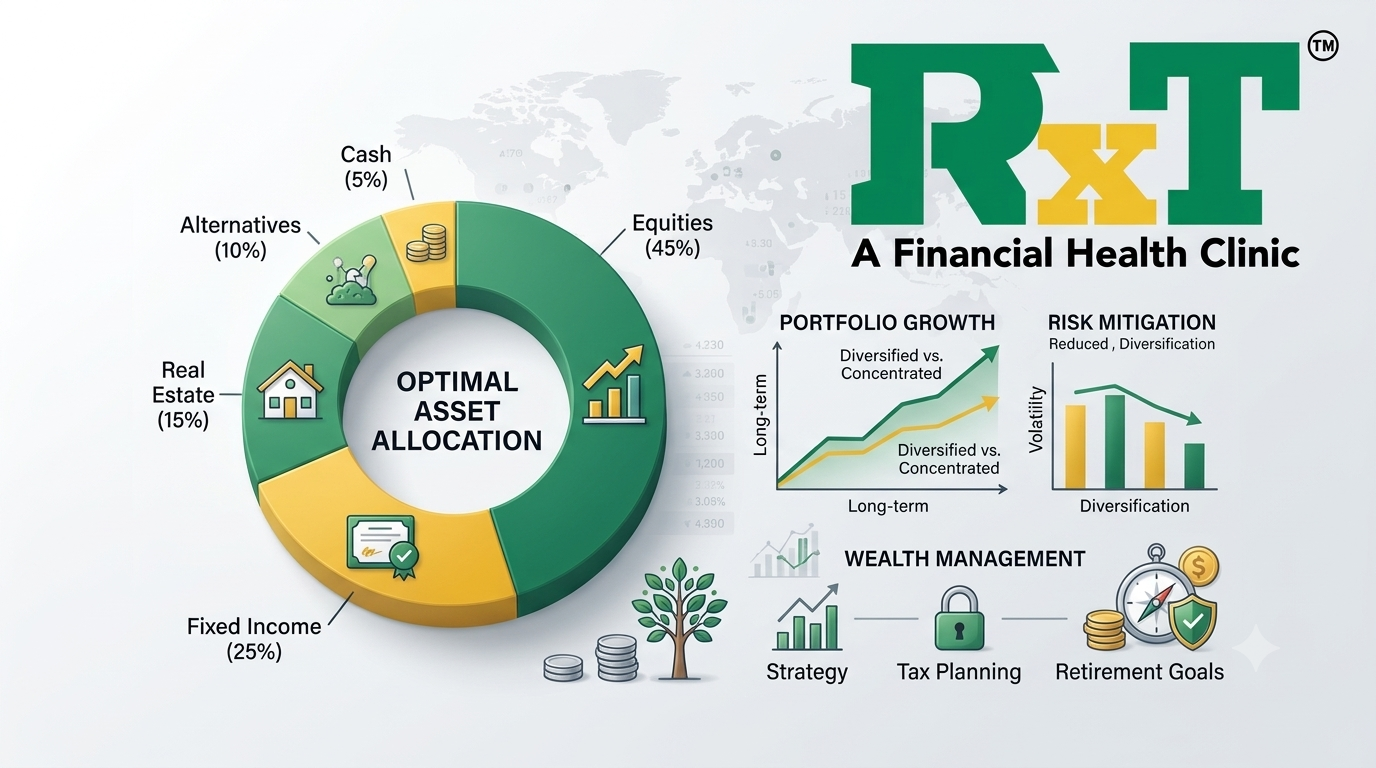
The video highlights the importance of allocating investments across different categories, including:
Gold
Real estate
Equities
Bonds
Each asset class serves a different purpose and has its own risk and return characteristics.
Diversification helps reduce the risk associated with depending excessively on a single investment.
The right allocation will differ from one investor to another depending on their financial circumstances and objectives.
Once you have established your investment strategy, follow it with discipline.
Do not suddenly increase your gold allocation simply because prices have reached another record high.
Similarly, do not abandon your long-term financial plan because of temporary market corrections.
Successful investing requires a combination of:
Proper planning.
Appropriate asset allocation.
Financial discipline.
Risk management.
Consistent execution.
The objective is not to predict every market movement but to build a portfolio that supports your financial goals.
No investment can increase continuously without experiencing corrections or periods of consolidation.
Even when an asset is performing exceptionally well, its price may remain stagnant for several years.
For example, if gold reaches a particular price level, it may consolidate around that level rather than immediately continuing its upward movement.
Investors should understand that temporary price stagnation is a normal part of financial markets.
There is no need to panic or rush into an investment simply because someone predicts that gold will reach an extraordinary price in the future.
The urgency should be in creating a proper investment plan, not in chasing rising prices.
The decision to purchase gold depends on your financial requirements, investment objectives, and overall portfolio structure.
Gold can have a place in a diversified portfolio. It may serve as a store of value and provide diversification during certain economic and market conditions.
However, buying gold solely because prices are rising can expose investors to unnecessary risks.
Before purchasing gold, consider the following questions:
Why am I buying gold?
How much gold do I actually need?
What percentage of my overall portfolio should be allocated to gold?
Am I buying because of a genuine financial requirement or because of market excitement?
Have I established a purchase timeline?
Is my portfolio sufficiently diversified?
Can I tolerate a temporary decline in gold prices?
These questions can help investors make more rational decisions.
There is no universal answer to whether gold should be purchased immediately or whether investors should wait for a correction.
The appropriate decision depends on individual financial circumstances.
Gold has historically delivered attractive returns, particularly for Indian investors when measured in rupee terms.
However, historical data also demonstrates that gold prices can fall significantly.
The corrections of 1980–1982 and 2011–2015 show that investors who purchase gold near market peaks may have to endure substantial declines.
Furthermore, the difference between international gold returns and Indian gold returns highlights the importance of understanding currency depreciation.
The biggest lesson is not that investors should avoid gold.
Instead, investors should understand why they are buying gold, how much they need, and how it fits into their overall financial plan.
Gold may be an important component of a financial portfolio, but it should not become the entire portfolio.
Do not invest because everyone else is investing. Do not rush because prices are rising. Do not assume that historical returns will continue indefinitely.
Plan your investments, diversify your portfolio, and execute your strategy with discipline.
At RxT – A Financial Health Clinic, we believe that financial wellness begins with understanding your money, identifying your financial needs, and choosing appropriate solutions.
The objective is not simply to accumulate assets. It is to build long-term financial health.
Yes. Historical data shows that gold prices have experienced substantial corrections. Gold declined by approximately 53% between 1980 and 1982 and around 45% between 2011 and 2015, according to the historical examples discussed in this article.
Indian gold prices are influenced by both international gold prices and the USD-INR exchange rate. When the Indian rupee depreciates against the US dollar, it can offset some or all of the decline in international gold prices.
The video discussed approximately 10% growth in US dollar terms and 14% in Indian rupee terms over the 2000–2025 period. These are historical figures discussed in the video and should not be treated as guaranteed future returns.
There is no guarantee. Future returns depend on international gold prices, currency movements, inflation, interest rates, geopolitical conditions, and investor demand.
No. Although gold is often considered a store of value and a safe-haven asset, its market price can decline significantly. Investors should understand the risks before investing.
A rising price alone is not a sufficient reason to purchase gold. Investors should consider their financial requirements, investment allocation, and long-term goals before making a decision.
There is no single allocation suitable for everyone. The appropriate amount depends on financial goals, investment horizon, risk tolerance, existing assets, and liquidity requirements.
Yes. Concentrating all investments in one asset class increases portfolio risk. A diversified portfolio may include gold, equities, real estate, bonds, and other suitable investments depending on individual requirements.
Watch the original video here.
RxT is a financial wellness service that approaches money management like healthcare. It focuses on identifying financial issues, understanding individual financial requirements, and providing appropriate solutions for better financial health.
Through financial education, consultations, and planning, RxT aims to help individuals and families make informed financial decisions.
Learn more: https://www.rxt.app
Disclaimer: This article is intended for financial education and awareness. Historical figures are based on the discussion in the referenced video and are approximate. They have not been independently audited or verified for this article. Past performance does not guarantee future returns. Gold investments involve market, currency, liquidity, and other risks. This article does not constitute personalised investment advice or a recommendation to buy or sell gold.