Is Gold Investment Smart? Facts You Need to Know
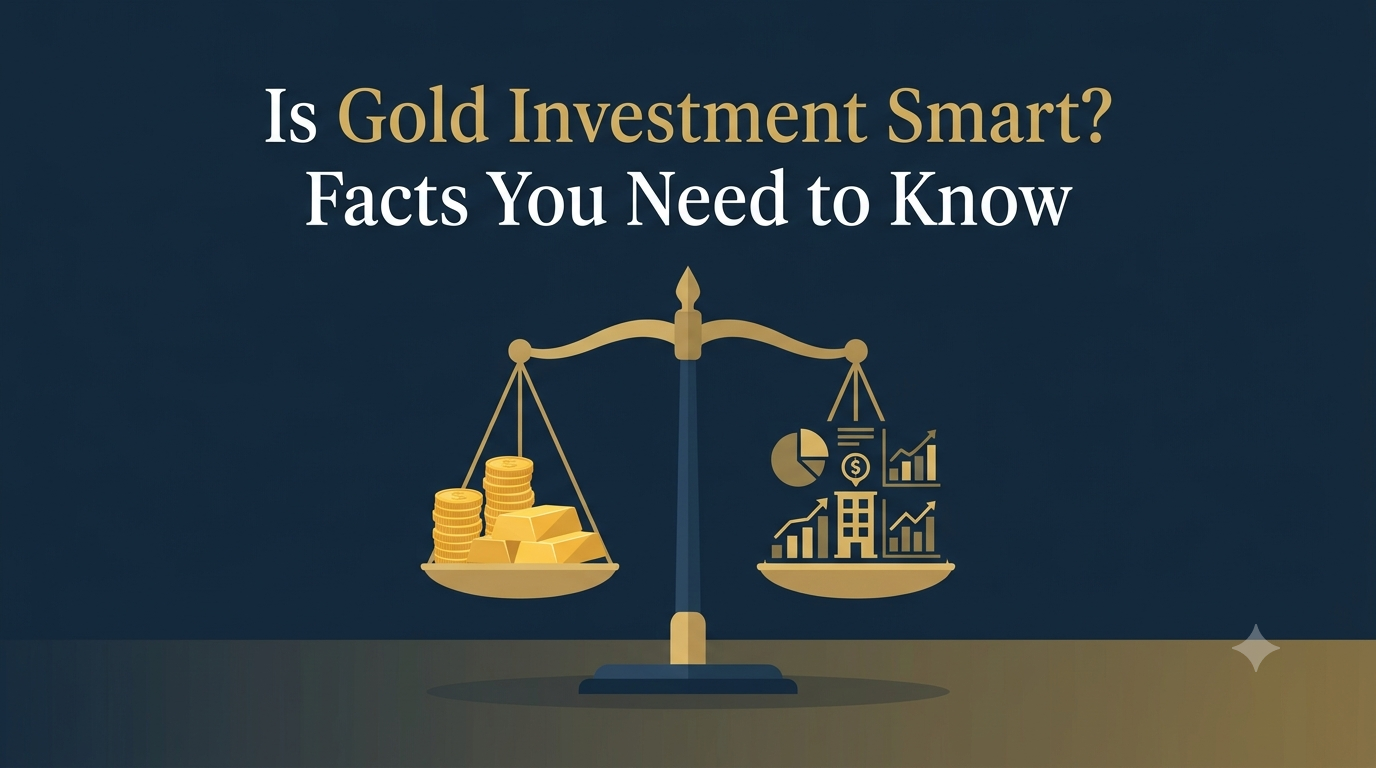
Is investing in gold a good idea? If gold prices keep rising, should you buy now? Is gold actually an investment?
These questions are on the minds of many investors today. For generations, gold has held a central place in Indian households, serving as a family tradition, social custom, wedding necessity, savings vehicle, and financial safety net.
However, buying gold jewelry and acquiring gold as a financial investment exposure are two different things. Based on insights shared by P.C. Balasingh from RxT – A Financial Health Clinic, this article breaks down the reality of gold investments, asset allocation, and financial planning.
Is Gold Investment Right or Wrong?
There is no simple "gold is good" or "gold is bad" answer. First, examine your intent behind buying gold:
For personal use / family wearing
For wealth generation
Buying jewelry for personal wear is an emotional or personal choice. But if buying for investment purposes, its economic performance must be evaluated independently. Purchasing gold jewelry incurs making charges, wastage (MC/VA), and taxes, which immediately reduce the effective asset value. Therefore, buying physical jewelry should not be equated with acquiring gold investment exposure.
Why Does Gold Feel Like a Reliable Investment?
Gold offers visible price updates every day. Comparing yesterday's gold rate to today's or last year's price is straightforward, creating a psychological sense of safety.
In contrast, financial assets like stocks, bonds, and mutual funds work through compounding and economic growth mechanisms that are less visually immediate. This gives rise to a strong behavioral bias: people trust assets they can physically see while remaining skeptical of financial assets that require learning to understand.
What Defines a True Investment?
When you invest ₹1 into an asset, you must understand how that rupee generates returns over time:
Cash-Flow Generating Assets: Investments like rental properties, bonds, or dividend-paying businesses generate income (rent, interest, dividends) independently of price changes.
Non-Cash-Flow Assets: Gold sitting in a safe produces no income. Its value only increases if someone else is willing to pay more for it later (capital appreciation).
Price appreciation alone does not make an asset a "productive, cash-generating investment."
What Drives Gold Prices?
Gold prices are not solely driven by retail buyers purchasing jewelry. They are heavily influenced by global macroeconomic conditions:
Central bank reserve purchases
Currency fluctuations (especially the US Dollar)
Geopolitical uncertainties and inflation hedging
A past rise in gold prices is driven by global macroeconomic triggers and is not a guarantee of similar future returns.
Beware of FOMO (Fear of Missing Out)
When gold surges rapidly, investors often think, "I should have bought six months ago." Chasing an asset after a major price surge driven by FOMO is market timing, not a structured investment plan. A discipline-driven asset allocation strategy prevents panic buying during market tops.
Portfolio Allocation: How Much Gold Should You Hold?
Putting 100% of your capital into a single asset creates severe concentration risk.
Asset ClassPrimary RoleGoldSafe-haven asset, inflation hedge, portfolio stabilizerSilverIndustrial demand driver, precious metal exposureEquities / Mutual FundsPrimary driver for long-term wealth creationDebt / BondsCapital preservation, steady incomeReal EstateCapital appreciation, potential rental cash flow
While a common benchmark suggests maintaining around a 10% gold allocation in a general portfolio, exact allocations must be customized based on your age, risk tolerance, financial goals, investment horizon, existing liabilities, and liquidity needs.
Gold vs. Silver: Key Differences
Gold and silver should not be treated identically:
Gold: Serves primarily as a monetary/financial asset and safe-haven hedge.
Silver: Has extensive industrial applications (electronics, green tech, manufacturing) in addition to precious metal traits.
Key Forms of Gold Exposure
Physical Gold (Jewelry/Coins): Includes design charges, storage costs, counterparty risks, and emotional attachment that makes selling difficult during rebalancing.
Financial Gold (SGBs, Gold ETFs, Gold Mutual Funds): Offers high liquidity, zero making/wastage charges, pure gold exposure, easy storage, and hassle-free portfolio rebalancing.
10 Key Rules for Gold Investors
Price rises do not make gold a cash-flow-generating asset.
Define your objective: Clarify whether you are buying for consumption or wealth building.
Jewelry is not pure investment exposure.
Past returns are no guarantee of future performance.
Gold prices depend heavily on global macroeconomic factors.
Avoid FOMO: Do not chase an asset class after a steep rally.
Gold and Silver serve distinct economic roles.
Diversification prevents concentration risk.
Never invest in a financial product you do not understand.
Review and rebalance your portfolio at least once a year.
Frequently Asked Questions (FAQs)
Is gold a good investment?
Gold plays a specific stabilization role in a portfolio. However, putting all your capital into gold is rarely an optimal strategy. Allocation depends on individual financial goals.
Does gold generate income?
No. Gold does not produce yield, dividends, or rental cash flow. Returns depend purely on market price appreciation.
How much gold should be in a portfolio?
A standard baseline often sits around 10%, though individual needs, risk profiles, and time horizons alter this ratio.
Is buying gold jewelry considered an investment?
Jewelry purchases carry emotional value and consumption costs (making charges, wastage). Pure financial gold instruments are better suited for investment objectives.
Conclusion: Stop Chasing Assets, Start Building Your Plan
Chasing gold when prices surge—or selling out in fear when prices drop—is not a long-term strategy. Focus on understanding your financial health, defining clear life goals, establishing a balanced multi-asset allocation, and reviewing your portfolio annually.
Editorial Note: This article is based on a structured financial literacy discussion with P.C. Balasingh (RxT – A Financial Health Clinic). Market figures and historical trends are for educational purposes only and do not constitute direct financial advice.